
NeuroStar TMS Therapy for Depression in Rockford, Minnesota
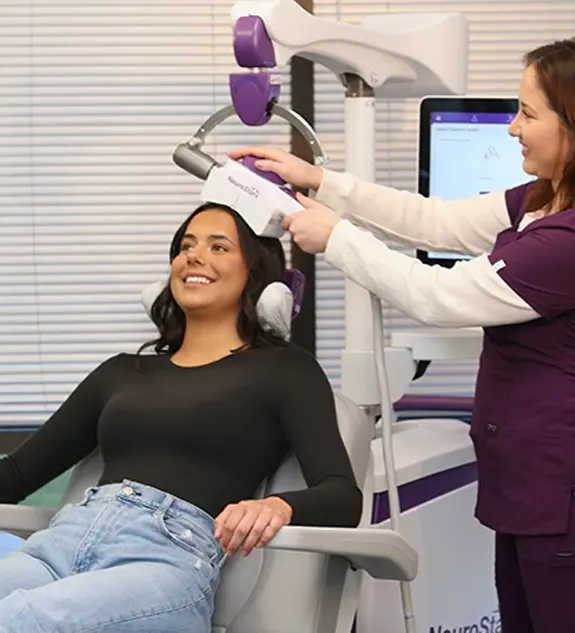
What Is NeuroStar TMS Therapy?
NeuroStar Transcranial Magnetic Stimulation (TMS) is a non-invasive, FDA-cleared treatment that uses focused magnetic pulses to stimulate specific areas of the brain involved in mood regulation. It is a non-medication treatment option for eligible patients with major depressive disorder (MDD) who have not experienced adequate relief from prior antidepressant medication.
Often described as “physical therapy for the brain,” TMS does not require medication, anesthesia, or sedation. Patients remain awake during treatment and can usually resume their daily activities immediately.
At our Rockford, Minnesota clinic, TMS is delivered within an integrated behavioral health model, allowing coordination with therapy and medication management when clinically appropriate.
How Does NeuroStar TMS Treatment Work?
NeuroStar uses transcranial magnetic stimulation to target brain regions involved in mood regulation. During a treatment session, a magnetic coil delivers focused pulses that stimulate nerve cells in targeted areas of the brain. This non-invasive procedure is different from electroconvulsive therapy (ECT) and does not require anesthesia.
NeuroStar TMS therapy may help eligible patients with depression who have not experienced satisfactory improvement from prior antidepressant treatment.
Conditions Treated with TMS
NeuroStar Advanced Therapy has FDA-cleared indications for specific conditions and patient groups:
- Major Depressive Disorder (MDD): Treatment for eligible adults who have not achieved satisfactory improvement with previous antidepressant medication during the current depressive episode.
- Depression with associated anxiety symptoms: NeuroStar may help decrease anxiety symptoms in eligible adults with MDD who also experience anxiety. This is not a standalone treatment indication for generalized anxiety disorder.
- Obsessive-Compulsive Disorder (OCD): NeuroStar is indicated as an adjunctive treatment for adults with OCD.
A clinical evaluation is necessary to determine whether TMS is appropriate based on your diagnosis, treatment history, and medical needs.
Many individuals with depression also experience anxiety symptoms, rumination, or stress. For eligible adults with MDD, NeuroStar may help reduce associated anxiety symptoms as part of their treatment plan. Individual results vary.
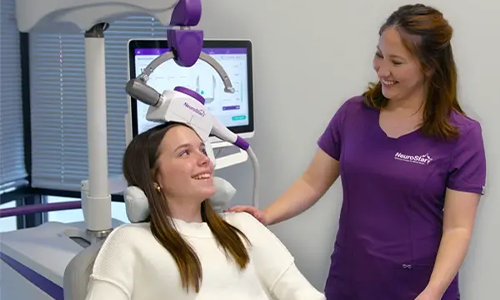

In Addition to Symptom Relief, Many Patients Report Improvements in:
- Focus and attention
- Mental clarity and everyday functioning
- Motivation and emotional regulation
- Stress tolerance and emotional reactivity
Who Is a Good Candidate for TMS?
- Have not experienced adequate relief from antidepressant medication
- Experience medication side effects
- Want to explore a non-medication treatment option
- Continue to experience depression symptoms despite therapy
- Have major depressive disorder with associated anxiety symptoms
- Prefer a targeted approach to depression treatment

TMS Therapy for Adolescents (Ages 15–21)
Adolescent depression and anxiety can occur together and affect everyday life. Families considering TMS can discuss their teen’s symptoms, prior treatment, and care goals with our team.
Clinical outcomes vary. Our team can explain the potential benefits, risks, and role of TMS within a comprehensive treatment plan. Learn more about teen counseling.
How Effective Is NeuroStar TMS for Depression?
NeuroStar TMS has been shown to help many patients with major depressive disorder who did not get enough relief from antidepressant medication.
Response and remission are not the same:
- Response: a significant improvement in symptoms, usually defined as a 50% or greater reduction on a depression rating scale.
- Remission: symptoms fall low enough that depression no longer significantly affects daily life.
Realistic expectations matter. TMS does not work for everyone, and some patients improve without reaching full remission. Your provider will track your progress with standard rating scales during treatment and talk with you about next steps if improvement is limited. Individual results vary.

What Makes Our TMS Program Different
- In-person NeuroStar TMS treatment in Rockford, MN
- A trained clinical team with behavioral health expertise
- Integrated care with therapy and medication management
- Support for depression with associated anxiety symptoms
- Consideration of adolescent and family needs when clinically appropriate
- Assistance reviewing insurance plans and potential coverage
- A focus on helping clients remain engaged in daily life
NeuroStar TMS Therapy Serving Rockford and the West Metro
What to Expect from TMS Treatment
- No anesthesia or sedation is required.
- You remain awake and alert during treatment.
- Most patients can resume normal activities immediately afterward.

How Long Does a TMS Treatment Course Take?
A standard NeuroStar TMS course takes about 6 to 9 weeks. Sessions typically occur five days a week and last 20 to 40 minutes, depending on the protocol.
Some patients notice improvements in mood, sleep, or energy within the first few weeks, while others improve later in the course. Your provider will monitor your progress and determine the appropriate treatment schedule.
What Are the Side Effects of TMS Treatment?
- Scalp discomfort at or near the treatment site during sessions
- Headaches, usually mild and manageable with over-the-counter pain relievers when approved by your provider
- Facial muscle twitching or tingling during pulses
- Lightheadedness in some patients
How Is TMS Different From ECT?
TMS and electroconvulsive therapy (ECT) are both brain stimulation treatments, but they are very different experiences.
| NeuroStar TMS | ECT | |
|---|---|---|
| Anesthesia | None needed. You stay awake. | General anesthesia required |
| Seizure | Not intentionally induced | Intentionally induced |
| Setting | Outpatient office visits | Typically a hospital or procedural setting |
| Recovery time | None. Most people resume normal activities right away. | Recovery period; may need someone to take you home |
| Common side effects | Scalp discomfort, headache | Possible confusion and short-term memory effects |

Insurance Coverage for TMS Therapy in Minnesota
Many insurance plans cover NeuroStar TMS therapy for eligible patients with major depressive disorder (MDD). However, coverage depends on your insurance provider, plan, and medical history.
Before starting treatment, our team can help verify your insurance eligibility and check whether your plan includes in-network coverage for TMS therapy. Some insurance providers require prior authorization, which means approval must be obtained before treatment begins.
Insurance requirements vary by plan. Contact your insurance provider or speak with our team to understand your coverage, authorization requirements, and potential out-of-pocket costs before starting treatment.
How Much Does TMS Therapy Cost in Minnesota?
- Deductible: You may need to pay a certain amount before your insurance starts covering treatment.
- Copay or coinsurance: Your plan may require a fixed payment or a percentage of the treatment cost.
- Without insurance coverage: You may be responsible for the full cost of treatment.

Is NeuroStar TMS Right for Me?
- Diagnosis and symptoms: whether your symptoms match an FDA-cleared indication
- Medication and treatment history: which antidepressants and therapies you have tried, and how you responded
- Medical history: including any history of seizures, head injury, or neurological conditions
- Contraindications: NeuroStar TMS may not be suitable for people with certain metal implants or medical devices in or near the head. Your provider will review these during screening.
Testimonials
Schedule a TMS Consultation
Wondering if NeuroStar TMS could help with your depression?
Our Rockford team can review your treatment history, discuss insurance coverage, and help determine whether a TMS consultation is appropriate.